What Is the Difference Between AR and VR Development Services?
Published on September 11, 2026 | Category: Digital Transformation
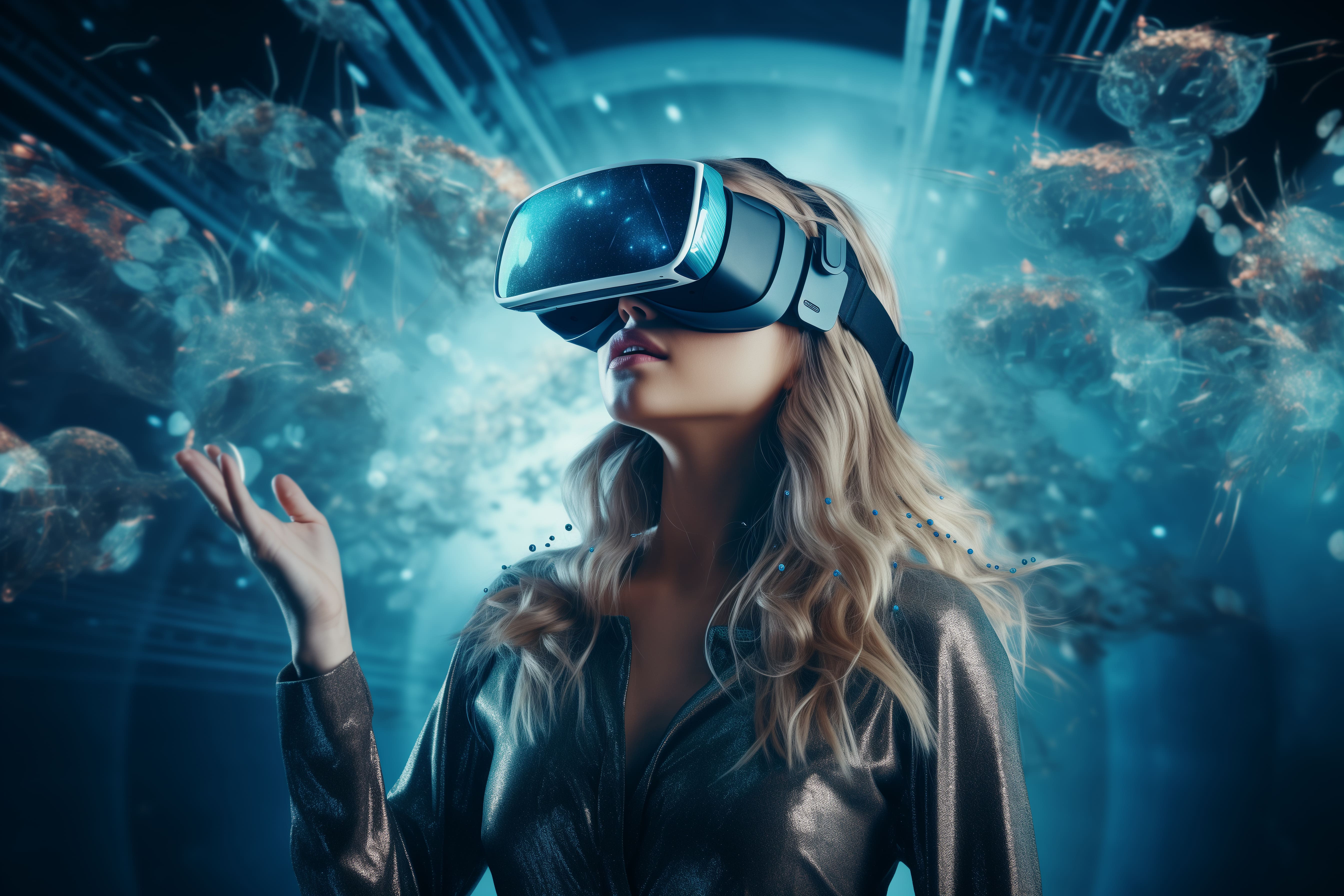
Augmented Reality (AR) and Virtual Reality (VR) are transforming how businesses create digital experiences, interact with customers, and train employees. Although both technologies are often discussed together, AR and VR development services serve different purposes and use different technologies to create immersive experiences.
Understanding the difference between AR and VR can help businesses choose the right technology for their applications, whether the goal is to improve customer engagement, provide immersive training, visualize products, or create interactive digital environments.
What Is AR Development?

Augmented Reality (AR) adds digital content to the real-world environment. Instead of replacing the user's surroundings, AR enhances them with virtual elements such as 3D objects, images, animations, information, or interactive features.
AR experiences can be accessed through smartphones, tablets, AR glasses, and other compatible devices.
For example, a furniture retailer can use AR to allow customers to visualize how a sofa or table would look in their home before making a purchase.
Common AR Development Applications
AR development services can be used for:
Product visualization
Retail and e-commerce experiences
Interactive advertising
Navigation and location-based experiences
Healthcare applications
Industrial maintenance
Education and training
Real estate property visualization
Marketing and customer engagement
What Is VR Development?

Virtual Reality (VR) creates a completely digital and immersive environment. Instead of adding digital elements to the real world, VR places the user inside a computer-generated environment.
VR applications typically use headsets and controllers that allow users to interact with virtual environments.
For example, a company can create a VR training simulation that allows employees to practice operating machinery in a controlled virtual environment without using physical equipment.
Common VR Development Applications
VR development services are commonly used for:
Employee training and simulations
Gaming and entertainment
Virtual tours
Healthcare training
Real estate walkthroughs
Education and learning
Product demonstrations
Industrial simulations
Virtual events and experiences
What Is the Difference Between AR and VR Development Services?
The biggest difference is how each technology interacts with the user's environment.
AR enhances the real world with digital content, while VR replaces the real world with a completely virtual environment.
Here are the key differences:
AR vs VR: Which Technology Should Your Business Choose?
The right technology depends on your business objective.
Choose AR when:
You want customers to interact with digital content in the real world.
You need product visualization.
You want to enhance mobile or retail experiences.
Your application needs real-world context.
You want users to access experiences without specialized headsets.
Choose VR when:
You need a highly immersive experience.
You want to create realistic simulations.
You are developing training environments.
You want to provide virtual tours or experiences.
Your application requires users to enter a completely digital environment.
In some cases, businesses can also combine AR and VR with other technologies to create extended reality (XR) solutions.
What Are the Benefits of AR/VR Development Services?
Businesses across industries are adopting AR and VR to create more interactive and engaging experiences.
1. Better Customer Engagement
AR and VR can make customer interactions more interactive than traditional websites, applications, and marketing content.
2. Improved Product Visualization
AR allows customers to visualize products in their actual surroundings, while VR can provide immersive product demonstrations and virtual experiences.
3. Interactive Training
VR can simulate real-world situations and allow employees to practice tasks in a controlled environment. This can be particularly useful for healthcare, manufacturing, aviation, and other industries where practical training is important.
4. Enhanced Learning Experiences
AR and VR can turn traditional learning materials into interactive experiences, helping students and professionals understand complex concepts through visualization and simulation.
5. New Marketing Opportunities
Brands can use immersive experiences to create memorable campaigns, interactive product demonstrations, and virtual experiences that encourage users to engage with their products or services.
What Industries Use AR and VR Development Services?
AR and VR are being adopted across multiple industries.
Healthcare
AR can support medical visualization and interactive applications, while VR can be used for training, simulations, and immersive healthcare experiences.
Real Estate
AR can help customers visualize properties and interior designs. VR can provide immersive virtual property tours without requiring customers to physically visit a location.
Retail and E-commerce
AR enables customers to visualize products before purchasing. For example, customers can preview furniture, accessories, or other products in their surroundings.
Education
AR and VR can create interactive learning environments, virtual laboratories, simulations, and immersive educational experiences.
Manufacturing
AR can support equipment visualization, maintenance guidance, and assembly processes. VR can provide simulated training environments and virtual prototyping.
Entertainment
Gaming, virtual events, interactive experiences, and digital entertainment are among the most established applications of VR and AR.
What Technologies Are Used in AR/VR Development?
AR/VR development can involve a combination of technologies and development platforms, including:
3D modeling and visualization
Computer vision
Artificial intelligence
Spatial computing
Motion tracking
Unity and Unreal Engine
ARCore and ARKit
3D graphics
IoT integration
Cloud technologies
The technology stack depends on the type of application, target devices, industry requirements, and level of interaction required.
How Do AR/VR Development Services Work?
A typical AR/VR development process includes several stages:
1. Requirement Analysis
The development team understands the business objective, target users, devices, and required features.
2. Concept and Experience Design
The user experience, interaction model, virtual environment, and overall application concept are defined.
3. 3D Design and Development
Developers and designers create 3D assets, environments, animations, and interactive elements.
4. Application Development
The AR or VR application is developed using appropriate frameworks and development platforms.
5. Testing
The application is tested for performance, usability, device compatibility, tracking accuracy, and overall user experience.
6. Deployment and Support
After testing, the application is deployed on the required platforms and can be continuously updated and supported.
How Much Do AR/VR Development Services Cost?
The cost of AR/VR development depends on several factors, including:
Application complexity
Number of features
3D modeling requirements
Target devices and platforms
Level of interaction
AI or IoT integration
Backend requirements
Testing requirements
Development timeline
A simple AR product visualization application will generally have different development requirements from a complex VR training simulation.
Businesses should therefore evaluate their requirements before estimating the overall development cost.
What Is the Future of AR and VR Development?
AR and VR are becoming increasingly connected with technologies such as AI, spatial computing, cloud computing, and 3D visualization.
AI can make virtual experiences more interactive and personalized, while spatial computing can enable digital content to interact more naturally with physical environments.
As devices become more capable and immersive technologies become more accessible, businesses can use AR/VR to create new ways of selling products, training employees, educating users, and engaging customers.
Conclusion
AR and VR both provide powerful ways to create immersive digital experiences, but they solve different business problems. AR enhances the real world with digital content, while VR creates a completely virtual environment.
The right choice depends on your business goals, target audience, application requirements, and desired level of immersion.
By working with an experienced AR/VR development services provider, businesses can turn ideas into interactive applications that improve customer engagement, training, visualization, and digital experiences.
If your business is exploring immersive technology, start by identifying the experience you want to create and then select the AR, VR, or XR solution that best supports that goal.
Is AR better than VR?
Neither technology is universally better. AR is more suitable when digital content needs to be integrated with the real world, while VR is better for fully immersive digital experiences.
What is the main difference between AR and VR?
AR adds digital elements to the user's real-world environment, whereas VR creates a completely virtual environment that users can interact with.
Can AR and VR be used together?
Yes. Businesses can combine AR and VR technologies as part of extended reality (XR) solutions to create different types of immersive experiences.
Which industries benefit from AR/VR development?
Healthcare, real estate, retail, education, manufacturing, entertainment, automotive, and many other industries can benefit from AR/VR development services.
How do I choose an AR/VR development company?
Look for experience in your industry, relevant AR/VR projects, technical expertise, development capabilities, device compatibility, post-launch support, and the ability to build solutions around your specific business requirements.
Latest Blogs
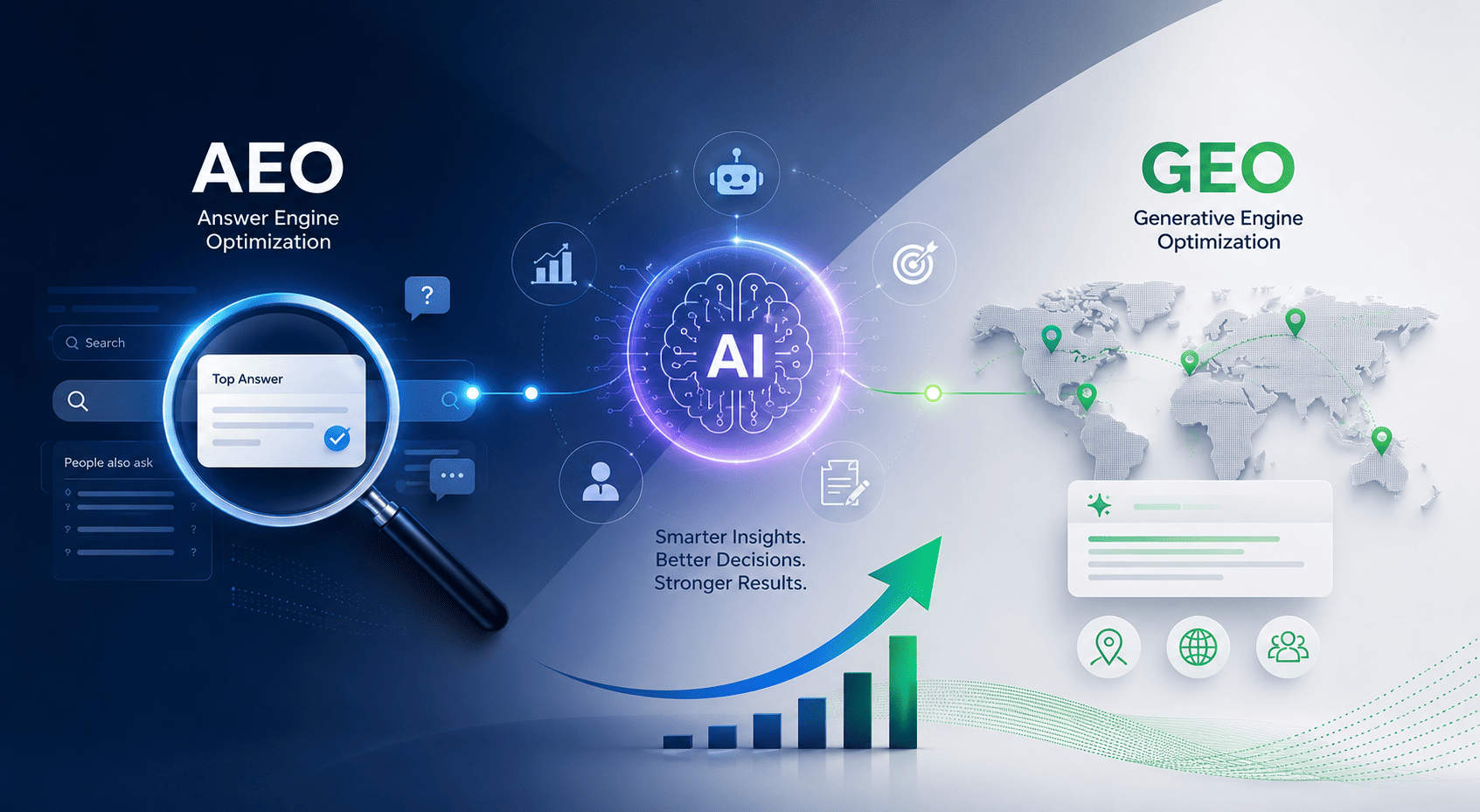
How AEO, GEO & AI Are Transforming Digital Marketing Services
Search is changing faster than ever. People no longer rely o...
Read MoreSeptember 02, 2026
.png)
Why Businesses Are Moving to Container & Microservices Architecture
As businesses scale their digital operations, traditional ap...
Read MoreAugust 18, 2026
.png)
How AI Is Transforming Digital Marketing Services
Digital marketing has always evolved alongside technology. F...
Read MoreAugust 03, 2026
Related Blogs

Why Every Business Needs Digital Transformation Services in the AI Era
Artificial Intelligence (AI) is reshaping the way businesses...
July 23, 2026
Read More.png)
Why Every Business Needs a Digital Marketing Agency
In today’s fast-paced digital landscape Why Every Business N...
July 03, 2026
Read More.png)
Custom Software Development vs SaaS: Which Is Better?
In today’s fast-moving digital world, technology decisions c...
February 27, 2026
Read More